
Sri Lanka, July 30, 2025
“It was almost as an afterthought that he said, ‘You know, I know this place very well. I used to go to school past this every day.’”
My friend and colleague — now a journalist — was talking about Chemmani, a place now synonymous with a long-buried horror. For years, his daily school journey included a routine stop: disembarking from a bus, presenting his ID to the military, and waiting—unsure of what would happen next.
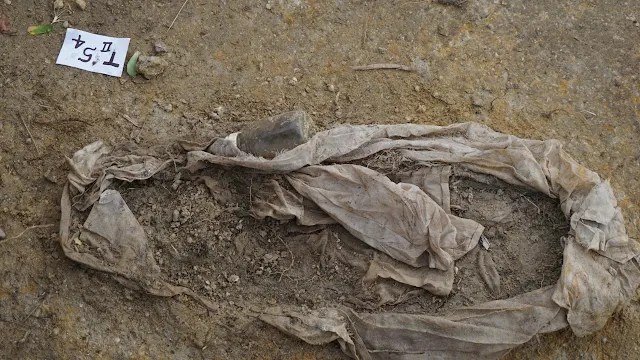
Where he once stood as a child, unsure whether he’d be waved on or taken aside, now stands a mass grave excavation site. For the past two months, trained forensic teams have been carefully uncovering over 100 sets of human remains, including those of a child estimated to be under five. These excavations were reignited when construction workers unearthed skeletal remains while digging nearby.
The story of Chemmani first came to light in 1998, when an ex-soldier, convicted of the rape and murder of a schoolgirl, revealed that bodies had been dumped near the Chemmani public burial ground. His confession sparked the first mass grave investigation, but it would take decades — and significant political pressure — for any meaningful follow-up to occur.
The Road to School, and the Road to Truth
“I just can’t imagine what some of these people went through,” my friend tells me. He speaks softly now, no longer the child who passed by the checkpoint in uniform, but a reporter documenting the grim details of those who may have never left the same spot.
His reporting is tireless. Day after day, he returns to the excavation site, notebook and recorder in hand, observing the delicate brushing away of history — bone by bone, story by story. Some remain silent. Others whisper through found objects: a blue school bag, a child’s toy, a feeding bottle, all discovered near the skeletons.
These fragments cut deep. They are not just artifacts. They are memory — of lost childhoods, stolen futures, and vanished identities. And they are personal. “This is the story of my community,” he says. “I can’t just report and look the other way.”
Journalism Under Fire, Trauma Without Borders
As the remains of the dead come into view, so too do the wounds of the living. Reporters covering Chemmani are facing trauma on multiple fronts:
- Personal and community trauma from being part of the story they report
- Intergenerational trauma inherited from years of suppression and silence
- Cultural trauma, as entire narratives of suffering are denied or dismissed
- And now, Technology-Facilitated Trauma (TFT) — amplified by hate, trolling, and direct threats
“This is where we first feel the impact of our work,” one journalist confided, referring to social media. “And it’s also where we face the backlash.” At least one reporter received a threatening audio message in the middle of the night — while working alone.
There is little institutional support, no trauma response training, and no professional debriefing. Reporters are absorbing it all — from the ground beneath their feet to the algorithmic echo chambers of rage online.
And yet, none of the journalists have stepped back.
This is both a testament to their courage and commitment, and a warning sign of how exposed they truly are.
Chemmani: A Story That Refuses to Stay Buried
Chemmani is not just a site. It is a story that refuses to die. A hybrid horror — equally online and offline. Physical and digital. It exists in whispers, trauma, courtrooms, hashtags, and death threats.
As more bones surface, they call for more than justice. They demand a reckoning — not only with the past but with the living systems that allow silence, hate, and impunity to flourish.
It’s not just an excavation of remains. It’s an excavation of memory, responsibility, and what it means to tell the truth when the truth is unbearable.


Leave a comment