
Valletta / New York – July 30, 2025
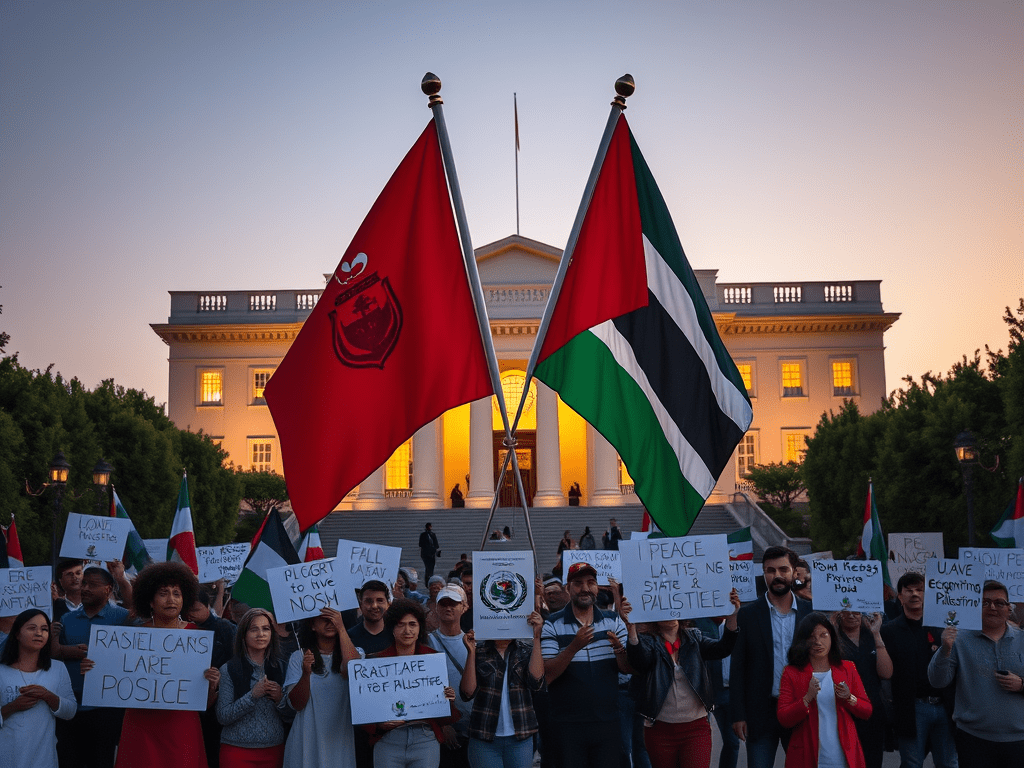
Malta has confirmed its intention to formally recognize the State of Palestine during the upcoming United Nations General Assembly session in September 2025, joining a growing list of European and global nations taking concrete diplomatic steps toward supporting Palestinian statehood.
Prime Minister Robert Abela announced the decision earlier this week, calling it a “principled stance in line with Malta’s historic commitment to justice, peace, and international law.” He emphasized that recognition would be based on the 1967 borders with East Jerusalem as the capital of a future Palestinian state.
Malta’s recognition is expected to coincide with a coordinated diplomatic gesture by other nations seeking to advance momentum toward a two-state solution, particularly after over a year of intensified conflict in Gaza and the West Bank.
🗺️ A Growing International Movement
Malta’s announcement comes on the heels of a wave of recognitions across Europe and beyond:
- Spain, Ireland, and Norway formally recognized Palestine in May 2024, citing the need to support legitimate Palestinian aspirations and pressure for a ceasefire and long-term peace.
- Slovenia followed shortly after, in June 2024, making it the fifth EU country to shift its position within months.
- France and the United Kingdom have signaled they are also preparing to recognize Palestine, with formal announcements expected later this year, potentially also during the September UN session.
- Over 140 UN member states have now recognized Palestine—more than two-thirds of the international community.
These moves reflect mounting frustration with the lack of progress in Israeli-Palestinian negotiations and growing calls for a diplomatic recalibration to balance what many governments view as decades of asymmetry in peace efforts.
📣 Diplomatic Pressure and the UN Context
Malta’s decision, originally anticipated during a UN conference in June but delayed due to scheduling changes, aligns with its long-held support for Palestinian self-determination. The recognition also carries symbolic weight as Malta prepares to take a more active stance during its upcoming role in various international forums, including within the EU and UN.
The Palestinian Authority has welcomed Malta’s announcement, calling it “a powerful act of solidarity and justice” that strengthens its international legitimacy. Palestinian President Mahmoud Abbas is expected to address the General Assembly in September, alongside leaders of other supportive nations.
The move has been met with criticism from Israel, which argues that unilateral recognitions undermine the peace process and reward the Palestinian leadership without requiring reforms or negotiations. Israeli officials have also cautioned against what they describe as “symbolic actions that escalate tensions.”
🇲🇹 Malta’s Role and Legacy
Malta has historically supported multilateralism and peaceful conflict resolution. In past decades, it maintained diplomatic relations with both Israel and Palestine, often serving as a voice for dialogue within the Non-Aligned Movement and the European Union.
Foreign Minister Ian Borg noted that the recognition of Palestine “reflects Malta’s moral responsibility and our belief that peace in the Middle East cannot be achieved without justice and mutual recognition.”
🔎 What’s Next?
With the UN General Assembly in September likely to see a series of coordinated recognitions and diplomatic declarations, international observers say 2025 may mark a turning point in efforts to revive stalled peace talks. Though symbolic, such recognitions place new pressure on major powers—including the United States and members of the UN Security Council—to reengage with the peace process.
For Palestine, every new recognition is seen as a diplomatic victory and a step toward achieving full membership in the United Nations.




Leave a comment