
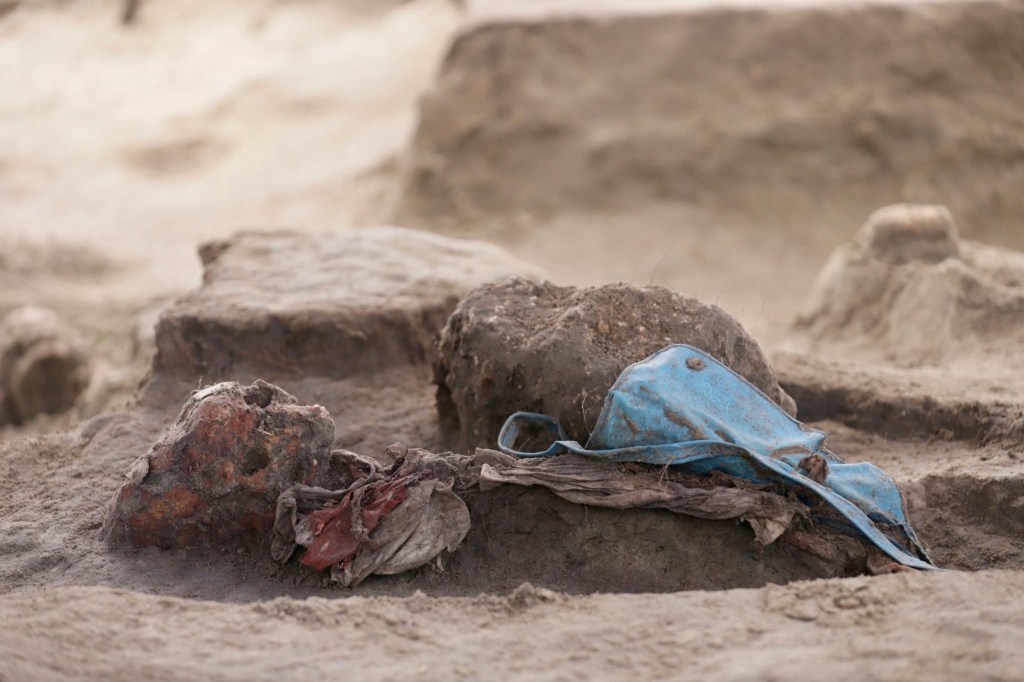
In the years following the end of Sri Lanka’s brutal civil war, the quiet discovery of mass graves across the island—particularly in the northern and eastern provinces—has cast a long and painful shadow over the official narrative promoted by the state. From Chemmani to Mannar, the evidence unearthed from the soil tells a story that contradicts claims of a clean war. It is a story marked by enforced disappearances, extrajudicial killings, and a persistent, deliberate lack of accountability.
Chemmani: A Story Reopened
The Chemmani mass grave, located near Jaffna, first drew national and international attention in 1998 when Sri Lankan Army Corporal Somaratne Rajapakse, on trial for rape and murder, made a startling confession. He alleged that mass graves in the Chemmani region contained the remains of hundreds of Tamil civilians arrested, tortured, and executed during the military’s occupation of Jaffna in the mid-1990s.
Under pressure from international observers and local courts, excavations in 1999 recovered 15 bodies. Forensic analysis linked several of them to individuals reported missing in 1996. Despite this breakthrough, the momentum faltered. The suspects were released on bail, the case was quietly shelved by the Attorney General’s office, and government officials dismissed further allegations of additional burial sites.
Two decades later, in 2025, Chemmani has re-emerged as a site of painful discovery. A new excavation revealed 19 more skeletons—among them, the remains of three infants. These findings lend further weight to long-held suspicions among Tamil survivors and human rights advocates: that the graves run deeper, and that the truth has yet to be fully unearthed.
Mannar: The Largest Mass Grave Yet
In 2013, another chilling discovery was made near a hospital in Mannar. What began as a small archaeological dig ultimately unearthed over 300 human remains, making it the largest known mass grave discovered in post-war Sri Lanka. The victims included women and children, some buried with personal belongings.
Initial carbon dating results were inconclusive, suggesting some remains were older. However, modern clothing and other artifacts indicated that the site may date back to the late 20th century—possibly during or shortly after the civil war. Yet again, the government avoided committing to a full investigation, casting doubt on the findings and suggesting political motivations.
A Consistent Pattern of Denial
The mass graves at Chemmani and Mannar are not isolated cases. Similar discoveries have occurred in Matale, linked to anti-insurgency campaigns in the late 1980s, and in Mullaittivu, where families have accidentally unearthed bones while tending to gardens or farms.
Across all these cases, a clear pattern emerges: denial, delay, and deflection. Successive governments have dismissed these graves as politically motivated “controversies,” often casting doubt on whether the victims were civilians. Independent investigations are rarely allowed, and official records frequently go missing. Witnesses are intimidated. Families of the disappeared are marginalized.
Despite repeated calls by international human rights organizations, the United Nations, and local NGOs, impartial forensic investigations have been blocked or ignored.
Channel 4 and the Battle Over Evidence
In 2009, Channel 4 News aired a groundbreaking documentary, Sri Lanka’s Killing Fields, which compiled survivor testimonies, leaked footage, and mobile phone videos to allege widespread war crimes by the Sri Lankan military during the final phase of the conflict. These included the shelling of no-fire zones, the execution of prisoners, and the rape of civilians.
The Sri Lankan government immediately banned the documentary, dismissed the claims as propaganda, and accused Channel 4 of attempting to tarnish the military’s image. Yet the documentary’s evidence was upheld by Britain’s Ofcom, which concluded that Channel 4 followed appropriate journalistic standards and that the content raised serious legal and ethical questions.
Instead of launching investigations, the government doubled down on denial, reinforcing the narrative that the war was fought cleanly and that military actions were justified in the name of national security.
The Disappeared: Still Waiting for Answers
According to Amnesty International, between 60,000 to 100,000 people have been forcibly disappeared in Sri Lanka since the 1980s—many of them ethnic Tamils in the north and east. For their families, mass graves represent a cruel paradox: a chance for closure, but also confirmation of their worst fears.
Truth commissions have been announced, rebranded, and quietly dissolved. Registries of the missing remain incomplete. For decades, families have held vigils, submitted petitions, and asked a simple question: Where are our loved ones?
Why These Graves Matter
Mass graves are not just historical relics or archaeological findings—they are crime scenes. Every bone, every item of clothing, and every tooth fragment is a piece of evidence. When these sites are dismissed or downplayed, it sends a clear message: that impunity is the norm, and justice can be buried just as easily as the truth.
If Sri Lanka truly seeks peace and reconciliation, it must reckon with these graves. That means fully independent forensic investigations, transparent access for victims’ families, and a public commitment to confronting the past honestly.
Without truth, there can be no reconciliation. Without accountability, there can be no lasting peace.
Conclusion
The mass graves in Chemmani, Mannar, and beyond are not anomalies—they are testimonies to a history written in silence and buried in soil. For the Tamil community, these discoveries confirm what they have long known. For the government, they remain an unresolved test of integrity and political will.
Justice delayed is justice denied. But in Sri Lanka’s silent north, the dead are still speaking. The world must listen.



Leave a comment