
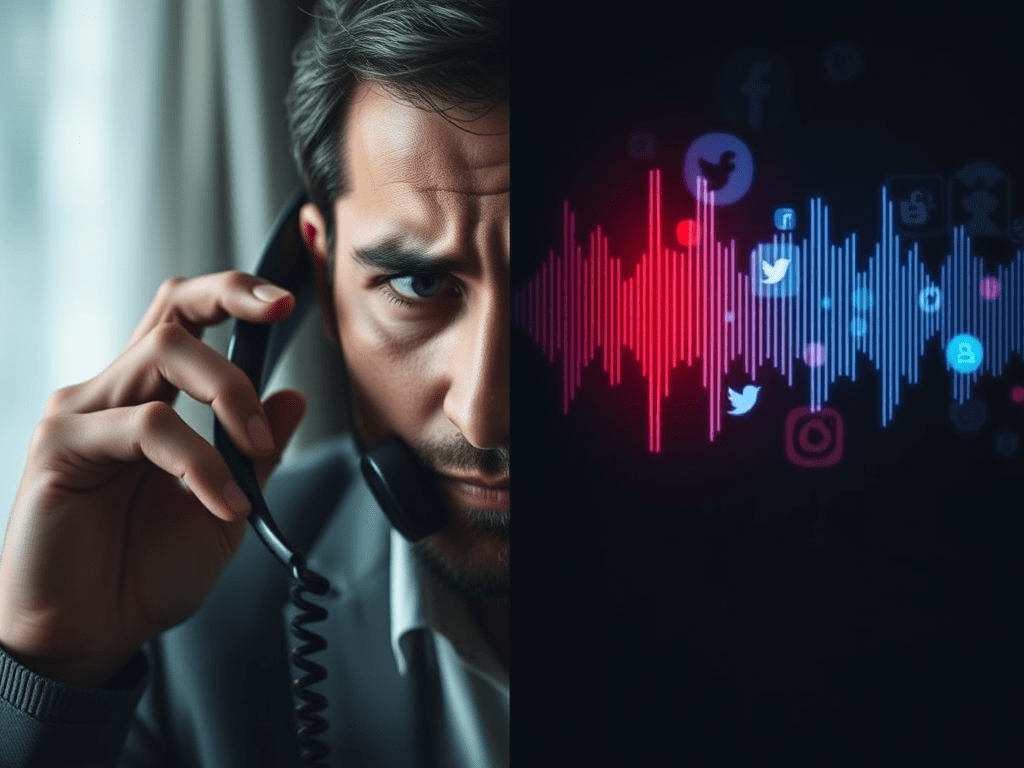
NEW YORK, July 31, 2025 —
As artificial intelligence continues to evolve, so does its darker side. A new wave of AI-generated voice technology, capable of mimicking human speech with uncanny accuracy, is being exploited by criminals in sophisticated scams, raising fresh concerns about security, privacy, and digital identity theft.
From cloned celebrity voices to family members’ speech patterns recreated with seconds of audio, synthetic voice cloning is no longer science fiction. In 2025, it’s a fast-growing tool in the arsenal of cybercriminals — and the consequences are deeply personal and financially devastating.
Voices That Deceive
In recent months, law enforcement agencies across the United States, Europe, and parts of Asia have reported a sharp uptick in cases involving voice-cloning scams. Victims describe receiving urgent phone calls that sound exactly like their children, spouses, or employers — pleading for help or requesting urgent transfers of money.
“It wasn’t just similar — it was my son’s voice,” said Julie Rodriguez, a 61-year-old retiree in California who transferred nearly $8,000 to what she believed was her son’s emergency fund. “The panic, the breathing, the way he says ‘Mom’ — they had everything right.”
In reality, cybercriminals had used just 15 seconds of publicly available audio, likely pulled from a social media video, to recreate her son’s voice with AI.
Billions at Risk
Cybersecurity experts warn that AI voice scams could soon rival email phishing in scale and financial damage. With generative voice tools now widely accessible online — and often free — bad actors can create highly convincing fake audio that bypasses traditional safeguards.
“Voice is becoming the new password,” said Arjun Nair, a digital security analyst based in Singapore. “And right now, we are woefully unprepared to deal with how easy it is to fake.”
Banks, insurance companies, and telecom providers — many of which use voice verification for identity authentication — are scrambling to upgrade systems. But the fraudsters are moving faster.
Regulators Sound the Alarm
In response to growing threats, several governments have begun reviewing AI regulation policies. The European Union has proposed stricter guidelines on the use of voice cloning, while the U.S. Federal Trade Commission is investigating the commercial use of synthetic audio by tech firms.
Still, experts say there’s a glaring gap between policy and enforcement. “We’re seeing technologies that can replicate a person’s voice so convincingly that it erodes the very concept of consent and authenticity,” said Dr. Lena Hoffman, a media ethics researcher. “This isn’t just about fraud — it’s about identity.”
What Can Be Done?
Experts recommend that consumers:
- Limit the availability of voice recordings on public platforms.
- Use multi-factor authentication for any financial or critical communication.
- Be skeptical of urgent requests made over voice calls, especially those demanding money or personal data.
- Confirm through alternative channels — such as video calls or direct in-person verification.
As technology continues to advance, the battle between innovation and misuse intensifies. And as synthetic voices grow more indistinguishable from real ones, it’s no longer just about what you say — but who really said it.





Leave a comment