
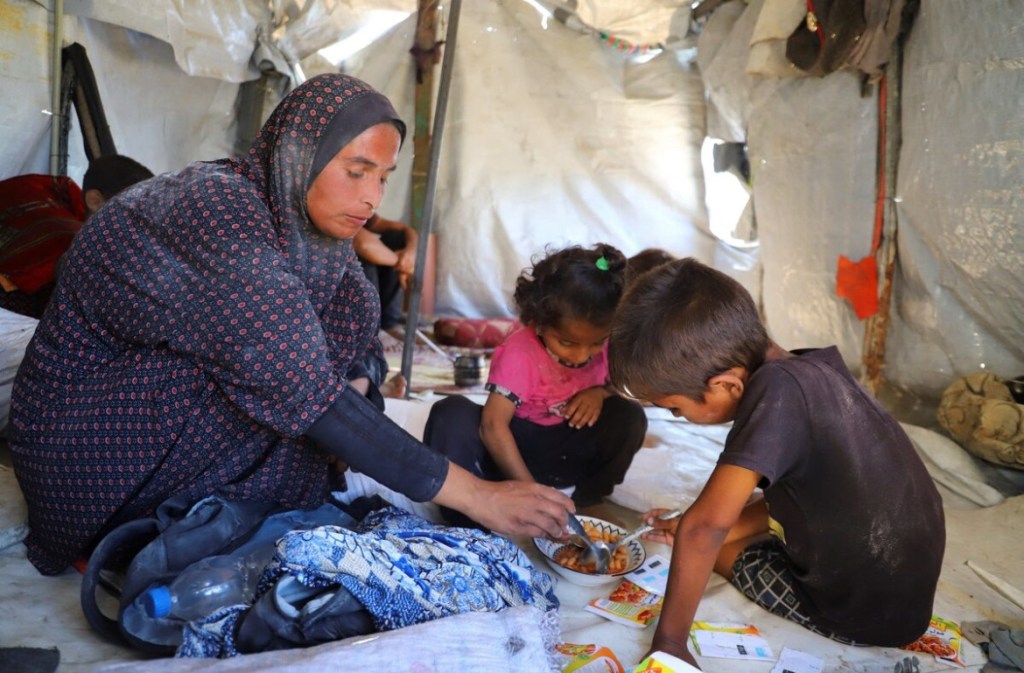
Rafah, Gaza Strip – August 3, 2025 — At least six more people, including two children, have died of starvation in Gaza in the last 24 hours, local health officials confirmed on Saturday, as the besieged enclave continues to grapple with catastrophic humanitarian conditions amid restricted access to aid.
While a rare fuel delivery was reportedly cleared to cross the border near Rafah, hundreds of aid trucks carrying food, medicine, and water remained stalled, awaiting security clearances and logistical coordination. Medical teams say the delay is costing lives every hour.
The Health Ministry in Gaza, operating under extreme duress, said that the majority of recent hunger-related deaths occurred in northern and central parts of the territory, where food deliveries have been sporadic or completely absent for weeks.
“It is beyond tragic. We are watching children waste away while aid sits metres away,” said a spokesperson for a local clinic near Khan Younis.
This latest update comes as international pressure mounts on both Israel and Egypt to facilitate more consistent and large-scale humanitarian access to Gaza’s 2.3 million residents, most of whom are now displaced, dependent on aid, or surviving on less than one meal a day.
A UN humanitarian coordinator based in Jerusalem confirmed that limited fuel shipments are now being allowed through for the operation of hospitals and water desalination plants. However, humanitarian agencies warn that fuel alone will not stop the tide of death from starvation and disease.
“Fuel is crucial, yes. But food is even more urgent. We are beyond emergency — this is an engineered famine,” said one UN logistics officer, speaking anonymously due to restrictions on media interaction.
More than 80% of Gaza’s population is estimated to be living in “crisis” or “emergency” levels of food insecurity, according to the Integrated Food Security Phase Classification (IPC), an internationally used tool for famine monitoring. Multiple UN agencies have warned that a formal famine declaration is imminent if unimpeded aid access is not restored immediately.
Israel maintains that all humanitarian efforts are subject to security screenings to prevent the flow of weapons or materials to Hamas, which continues to operate in parts of the enclave. However, aid groups argue that collective punishment is illegal under international law and that the deliberate denial of food and medicine constitutes a war crime.
As trucks line up in blistering heat at the southern border crossing, some drivers have now been parked for days, sleeping inside their vehicles as negotiations drag on between military authorities and aid organisations.
Meanwhile, Gaza’s health infrastructure is collapsing. Several major hospitals have shut down operating theatres due to fuel shortages and lack of basic surgical supplies. Makeshift wards now treat hundreds of malnourished patients with minimal electricity and no intravenous nutrition.
One doctor in Rafah, who asked not to be named, broke down mid-interview:
“We are trying to keep people alive with nothing. It’s like digging a grave every morning.”
The International Committee of the Red Cross has renewed its call for immediate and unhindered humanitarian access, while UNICEF warns that Gaza’s children face irreversible damage from long-term malnutrition even if aid resumes.
Despite the isolated fuel entry on Saturday, experts say it is a drop in the ocean, and unless broader humanitarian corridors open swiftly and consistently, the death toll will continue to climb in silence.





Leave a comment