
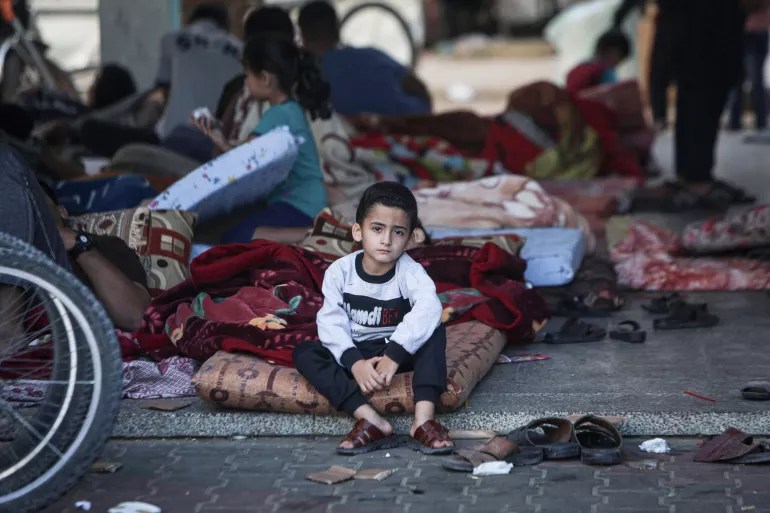
Gaza City – August 4, 2025
In Gaza, time is no longer measured in days or weeks—it is measured in the lives of children.
For nearly two years, the war-ravaged enclave has witnessed a toll so harrowing that international agencies now use one haunting metric: on average, more than one Palestinian child has been killed every single hour since October 2023.
According to verified figures from health authorities in Gaza, at least 18,592 children have been killed in Israeli military operations during the past 22 months—representing 31 percent of all deaths in the territory since the onset of the full-scale conflict.
Many of those lost were infants and toddlers. In some cases, babies were killed just hours after birth, before they were even given a name. Their mothers, still holding the physical memory of labour, now carry only the grief of unimaginable loss. Hospitals, already collapsing under blockade and bombardment, have become morgues, shelters, and in some tragic cases—targets.
Tens of thousands of other children have been orphaned, and countless more have suffered life-changing injuries, amputations, and deep psychological trauma. Schools, playgrounds, and homes—places where children once found safety—have turned into burial grounds. With nowhere left untouched, children now carry the scars of war both inside and out.
UNICEF: Gaza Is the “Most Dangerous Place in the World to Be a Child”
The United Nations Children’s Fund (UNICEF), which has repeatedly sounded the alarm throughout the conflict, reaffirmed in its latest statement that Gaza is now “the most dangerous place in the world to be a child.” UNICEF officials cite the near-total collapse of health care, education, water and sanitation, alongside constant exposure to violence, malnutrition, and displacement.
“Children in Gaza are not simply caught in the crossfire,” said one senior UNICEF field officer in Rafah. “They are increasingly the primary victims of this war, dying in their beds, in their mothers’ arms, in makeshift shelters, and under the rubble of their homes.”
An Entire Generation at Risk
Beyond the staggering death toll, experts warn that the long-term consequences of the war on Gaza’s children will stretch far beyond the battlefield. The destruction of schools and educational infrastructure has robbed hundreds of thousands of children of access to learning and development.
Many now suffer from toxic stress, a prolonged exposure to fear and trauma that can stunt brain development and lead to long-term mental health disorders. Human rights groups warn that a generation of children is being shaped by grief, displacement, and instability—with little international intervention to stop the bleeding.
Global Appeals Continue as Ceasefire Efforts Stall
Despite repeated calls by humanitarian organisations for an immediate ceasefire and protection of civilians, the fighting continues. Aid agencies have described working conditions in Gaza as “beyond crisis,” with critical shortages of fuel, medicine, and food worsening by the day.
The UN and several international medical NGOs have called for unimpeded access to Gaza’s hospitals and refugee shelters, where children with shrapnel wounds and third-degree burns are being treated without anaesthetics or proper care.
World leaders continue to issue statements urging restraint, but for the families of Gaza, the words come too late—or not at all.
A War Written on the Bodies of Children
The numbers alone are difficult to comprehend. Behind every statistic is a name, a birthday that will no longer be celebrated, a backpack that will never be worn again.
In Gaza, the rhythm of life for children is now a rhythm of mourning. Each hour claimed by war is an hour that erases laughter, potential, and future.
As the conflict drags on, the world is left to confront a devastating truth: the war on Gaza has become a war on its children.



Leave a comment