
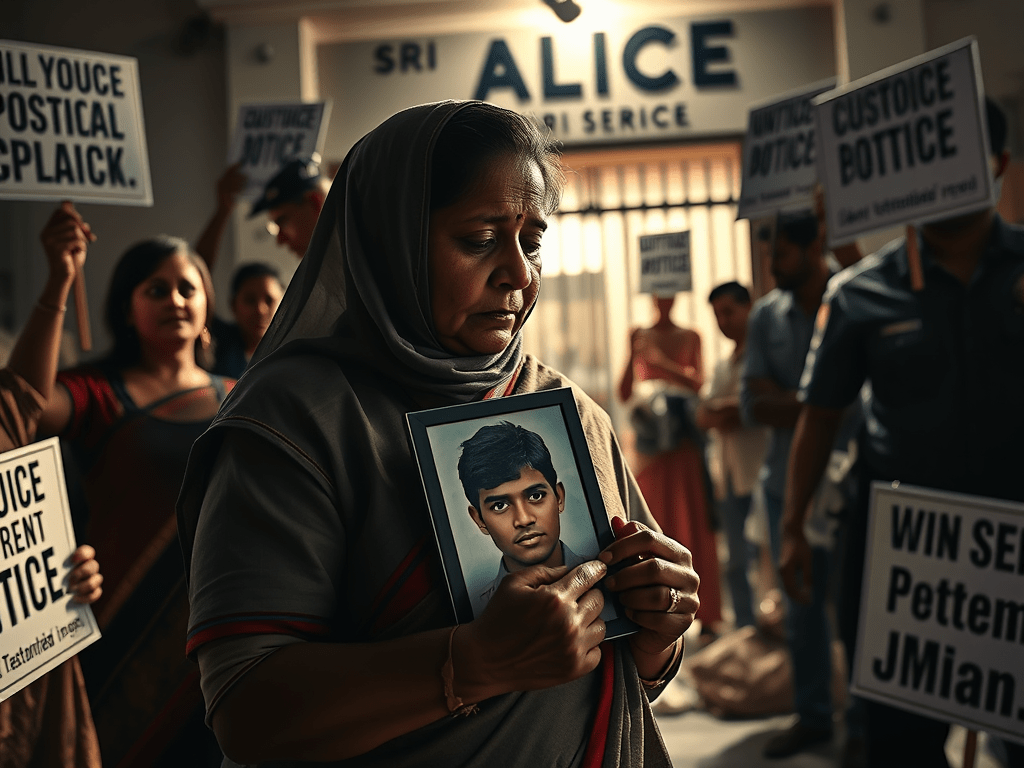
Colombo, August 4, 2025 — As the Human Rights Commission of Sri Lanka (HRCSL) presses for accountability in police custody procedures, the country is being forced to confront a longstanding and deeply rooted crisis — the recurring deaths of individuals held under state supervision.
The HRCSL’s latest order to the Inspector General of Police, demanding the appointment of an officer to oversee custodial death protocols and a detailed report by August 28, is a clear sign that institutional patience has worn thin.
A Pattern Too Familiar
Custodial deaths are not isolated incidents in Sri Lanka. They are part of a persistent and disturbing pattern. From the capital to rural police outposts, individuals have died in detention, often under suspicious circumstances. Families receive vague explanations: a seizure, a fall, or a fight — but rarely are officers held to account.
In many cases, the victims are young men from economically or socially vulnerable communities. Their deaths seldom make headlines for long, and their families are left without answers.
“They told me he slipped and fell in the cell,” recalled a mother from Gampaha whose son died in police custody in 2023. “But I saw the bruises. They couldn’t hide the truth from a mother.”
HRCSL’s Push for Reform
The Human Rights Commission, under increasing public pressure, has consistently issued guidelines for the treatment of detainees — from arrest to remand. These include immediate access to medical care, legal representation, and formal reporting of deaths to both the next of kin and relevant oversight bodies.
But implementation has been weak. While the HRCSL can recommend, investigate, and report, it cannot prosecute. Responsibility for justice ultimately lies with the police, the Attorney General’s Department, and the judiciary.
By demanding a dedicated oversight officer, the Commission is signalling that compliance will no longer be taken for granted. Officials close to the matter say the appointed officer must report not only procedures but also failures to comply — a move that could expose long-suppressed data on how detainees are actually treated.
Public Trust on the Line
In a country where trust in law enforcement is already fragile, every new custodial death further erodes public confidence.
“Police must protect, not silence,” said retired civil servant and human rights advocate Mahinda Illeperuma. “If people believe they are not safe in custody, we lose something vital — the rule of law itself.”
Several civil society organisations have called for the appointment of an independent custodial death review board, arguing that internal investigations lack credibility.
For now, the HRCSL’s order has placed the burden squarely on the police hierarchy. Whether it results in structural change or yet another report gathering dust remains to be seen. But for families who have lost loved ones behind locked doors, even one truthful answer would be a start.




Leave a comment