
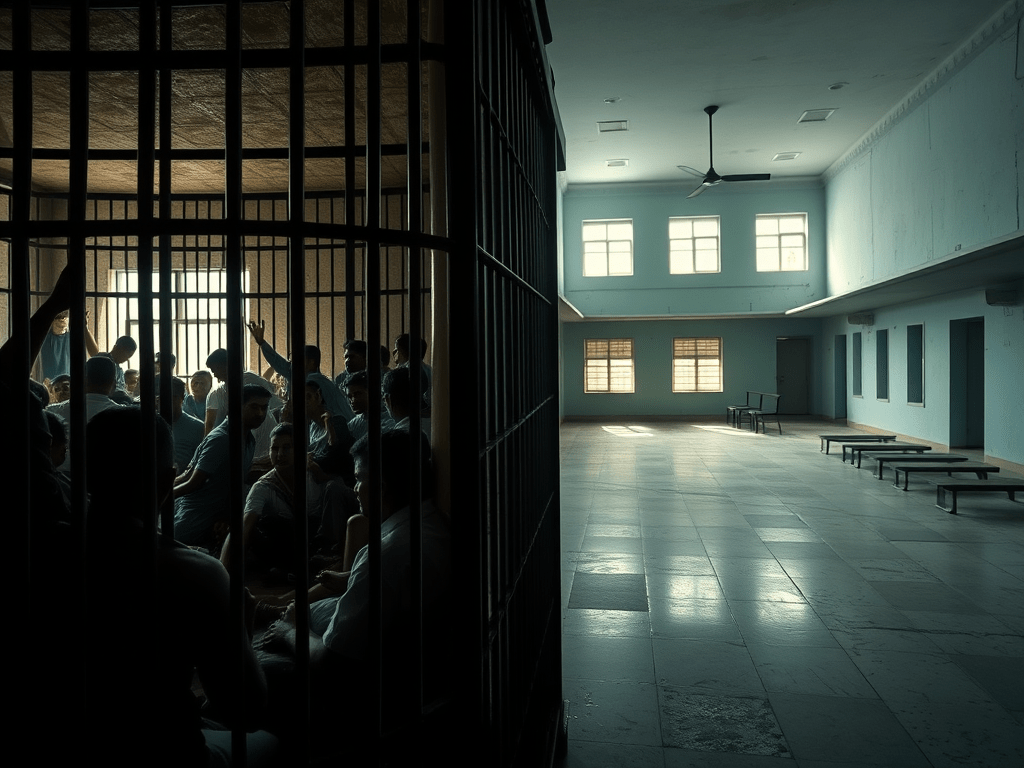
Sri Lanka is confronting a deepening crisis as an aggressive campaign against drug offences results in soaring arrests and dangerously overcrowded prisons, while rehabilitation centres operate well below capacity.
Since the start of the year, authorities have arrested more than 125,000 individuals across the country for various offences, with over 100,000 tied directly to drug-related crimes, according to data from the Ministry of Public Security in Colombo. This surge has pushed the nation’s 36 prisons to hold nearly 34,000 inmates—almost three times their official capacity of 12,000.
Prisons Commissioner Jagath Weerasinghe confirmed that drug offenders account for more than 65% of the incarcerated population. The overcrowding has placed immense strain on resources and personnel, with reports highlighting concerns over the treatment of both local and foreign inmates.
Between January and August, police seized substantial quantities of illegal substances, including over 930 kilograms of heroin, close to 1.4 tonnes of methamphetamine, and more than 11 tonnes of cannabis. Despite these enforcement efforts, drug use and trafficking remain persistent challenges.
Meanwhile, rehabilitation efforts have not scaled up to meet demand. The Bureau of Rehabilitation, which operates three centres in Kandakadu, Senapura, and Vavuniya, has a combined capacity for 1,120 people. Yet, only 638 individuals are currently undergoing treatment, including 108 women.
Court-mandated rehab programmes typically last six months, but limited referrals and systemic challenges have kept occupancy low. Officials are calling for greater government investment in prevention, awareness, and treatment to complement law enforcement.
“We need a strong mechanism to prevent drug addiction and educate the public about the dangers of drugs,” Commissioner Weerasinghe said, emphasizing the need for balanced solutions that address both rehabilitation and enforcement.
As Sri Lanka grapples with the human and infrastructural toll of its drug crackdown, experts warn that without increased focus on rehabilitation and public education, the cycle of addiction and incarceration will continue to overwhelm the justice system.





Leave a comment