
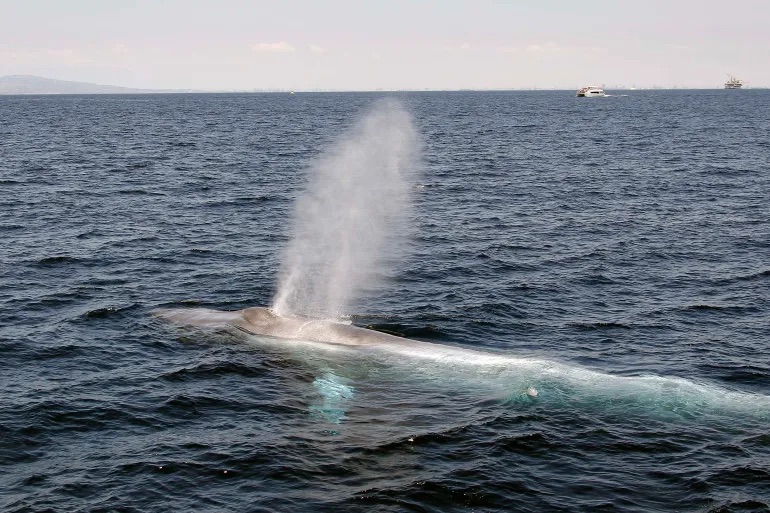
Scientists studying whale vocalisations have uncovered troubling signs that blue whales—the largest mammals on Earth—are singing less frequently, a shift linked to shrinking food supplies and rising ocean temperatures. These findings, from research conducted in New Zealand and the North Pacific, reveal the profound impact climate change is having beneath the waves.
Blue whale songs are not typical melodies but a complex mix of groans, clicks, and whistles used for communication during feeding and mating. Remarkably powerful, these sounds can travel up to 10 kilometers underwater and last for half an hour. Researchers rely on these vocalisations as a window into whale behaviour, but recent studies show blue whales are becoming unusually quiet.
Between 2016 and 2018, a team from the Marine Mammal Institute at Oregon State University monitored blue whales off New Zealand’s west coast using underwater hydrophones. They observed significant drops in feeding-related calls during warmer months, suggesting that food availability had declined. This decline was followed by fewer mating songs, indicating that reduced feeding opportunities may suppress reproduction. Lead researcher Dawn Barlow explained that when food is scarce, whales invest less energy in breeding.
A separate study, covering 2015 to 2020 in the California Current Ecosystem, examined blue whales alongside humpback and fin whales. Early in the period, blue whales sang far less—a pattern linked to marine heatwaves that devastated krill populations, their primary food source. Krill are highly sensitive to temperature, dispersing or dying off during these heat events, which disrupt the entire food chain.
The warmer waters also encourage toxic algae growth, threatening marine mammals with poisoning. When krill numbers rebounded between 2017 and 2020, blue whales increased their singing again. However, as krill declined anew, blue whale songs diminished while humpback singing continued—highlighting blue whales’ greater vulnerability due to their smaller population and less adaptable feeding habits.
Scientists from the Monterey Bay Aquarium Research Institute, who led the North Pacific study, warn that these vocal changes are a signal of ecosystem stress caused by ongoing global warming. With recent years among the hottest on record, blue whales are facing a critical challenge: spending more time searching for food leaves less energy for communication and mating.
The studies underline the delicate balance marine life maintains and offer a stark reminder of climate change’s tangible impact beneath the ocean’s surface. For the world’s largest mammals, silence may be a sign that the oceans are struggling to sustain them.





Leave a comment