
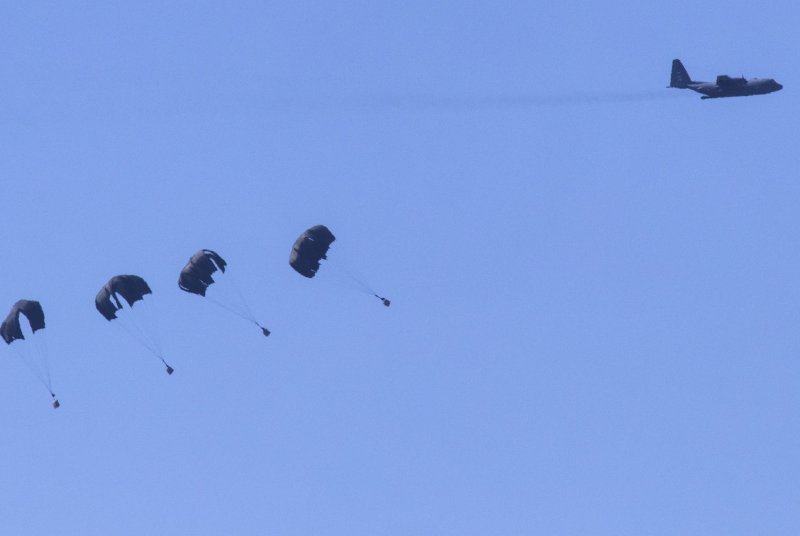
From the heart of Gaza’s Az-Zawayda neighborhood, the stark reality of so-called humanitarian airdrops is laid bare by a witness who has seen the suffering up close. When aid crates fall from the sky, it is not relief but chaos and danger that follow.
Residents, fearful and desperate, do not dare approach the falling supplies because gunfire erupts the moment aid hits the ground. Armed groups fight violently to seize the goods, ensuring that those most in need are often the last to benefit—if at all. Many of these aid packages are then resold at exorbitant prices in local markets, placing basic necessities like biscuits beyond the reach of hungry families.
Tragically, the airdrops themselves have caused deaths and injuries. A medic was killed when an aid pallet struck a displaced persons’ tent, and previous drops have resulted in fatalities from parachutes failing or people drowning while trying to collect floating supplies.
These airdrops were initiated at the urging of Israeli Prime Minister Benjamin Netanyahu and supported by some international governments. Yet, critics inside Gaza see them as a cynical attempt to conceal the reality of a crippling blockade that starves millions by restricting ground aid deliveries.
While thousands of trucks wait on the Egyptian border, capable of delivering far more aid safely and efficiently, the world watches as a handful of pallets fall from the sky—an ineffective spectacle that prolongs famine.
The United Nations and humanitarian experts agree: ground delivery is vastly superior and far less dangerous. The continued reliance on aerial drops reflects not a lack of options, but a failure of political will.
Gaza endures not only bombing but also a siege of silence and complicity. The world’s refusal to impose meaningful sanctions and halt arms transfers to Israel deepens the crisis.
As starvation claims hundreds, including many children, those who remain silent or equivocate become partners in this ongoing tragedy. When history judges this era, it will not be in diplomatic euphemisms but in the clear naming of those responsible for the mass suffering of the Palestinian people.
The people of Gaza are not just victims—they are witnesses, calling out for justice amid a world that too often looks away.




Leave a comment