
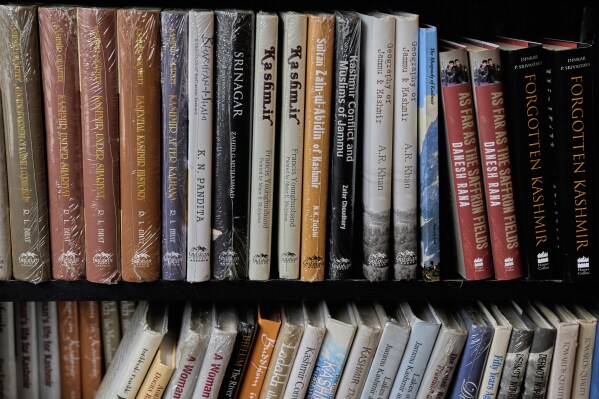
Srinagar, Kashmir — Authorities in Indian-administered Kashmir have banned 25 books by prominent scholars, writers, and journalists that critically examine the region’s history, politics, and human rights issues. The banned titles include Colonizing Kashmir: State-Building under Indian Occupation by Hafsa Kanjwal, Azadi by Arundhati Roy, and A Dismantled State by journalist Anuradha Bhasin.
The move comes as police raided bookstores in Srinagar, seizing copies of blacklisted works. Yet paradoxically, the government is also promoting literary culture through a state-sponsored book festival held this week on the banks of Dal Lake.
Kanjwal called the ban unsurprising given the intensified censorship and surveillance since New Delhi revoked Kashmir’s special autonomous status in 2019. “It is even more absurd that the ban coincides with efforts to promote reading through the Chinar Book Festival,” she said.
The government justified the prohibition by accusing the banned books of “misguiding youth” and fostering a culture of grievance, victimhood, and “terrorist heroism.” The titles discuss Kashmir’s disputed status since Partition in 1947, chronicling alleged human rights abuses, political dissent, and promises unfulfilled by Indian authorities.
For decades, Kashmir’s population has experienced censorship, media blackouts, and the detention of journalists and activists. Since 2019, this clampdown has intensified, shifting focus from silencing press voices to restricting academic and literary discourse.
Veteran editor Anuradha Bhasin, whose own book is banned, warned that such measures threaten academic freedom and could deter publishers from producing critical works on Kashmir. “There’s a dangerous blurring of criticism of the state with glorification of violence,” she said.
Local scholars and students lament the ban as an attempt to erase key narratives from Kashmir’s literary canon. Sabir Rashid, an independent researcher, said removing these books will skew future scholarship and deepen collective amnesia about the region’s complex history.
Historian Sumantra Bose, another author on the list, expressed dismay at accusations that his peace-oriented scholarship incites violence. He noted the historical irony of bans continuing a family legacy: decades ago, British colonial authorities banned a political book by his great-uncle, Subhas Chandra Bose.
As Srinagar confronts this paradox of censorship amid cultural celebration, the ban underscores the deep political tensions that persist over Kashmir’s past, present, and future.


Leave a comment