
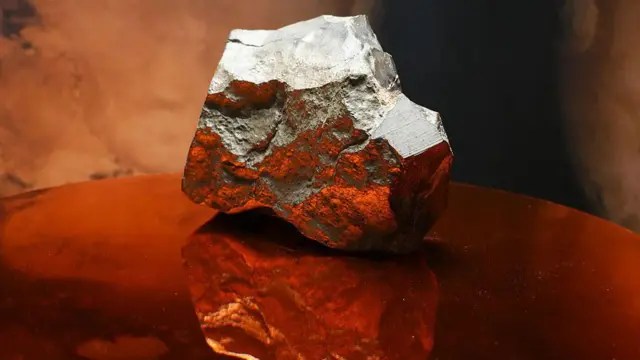
Niamey, Niger / Chicago, USA – A rare meteorite from Mars, discovered two years ago in Niger and recently auctioned in New York for $4.3 million, has ignited controversy over the rights to extraterrestrial artifacts and the preservation of national heritage.
The meteorite, weighing 24.7 kilograms and known scientifically as NWA 16788, is the largest Martian rock ever found on Earth. Despite its astronomical value and scientific importance, questions have emerged about how it left Niger and whether any proceeds from the sale benefited the country. The seller and buyer remained anonymous in the Sotheby’s auction last month.
Professor Paul Sereno, a renowned palaeontologist affiliated with the University of Chicago and founder of the Niger Heritage organization, expressed deep frustration. Speaking from Chicago, he called the sale “brazen” and insisted the meteorite belongs in Niger, not in private hands abroad.
“This is not just a rock from space; it’s part of Niger’s natural heritage, something belonging to the people and the country,” Sereno said. He highlighted Niger’s lack of specific legislation on meteorites and argued international law prohibits removing culturally or scientifically significant items without consent.
The meteorite was reportedly found in November 2023 by an anonymous “meteorite hunter” in the Agadez region of Niger’s Sahara Desert. After being sold by the local community to an international dealer, it traveled through an Italian gallery before reaching Sotheby’s. Scientific teams in Italy examined parts of the meteorite, while slices remain there for further study.
Niger’s government has questioned the legality of the export, raising concerns about illicit trafficking. Sotheby’s maintains that all relevant export and import procedures were followed and is reviewing the situation amid Niger’s ongoing investigation.
The case echoes similar challenges faced by Morocco, which has long grappled with meteorite trade regulation amid its rich Saharan deposits. Geologist Professor Hasnaa Chennaoui Aoudjehane from Morocco emphasized that meteorites are part of a nation’s identity and heritage. She described the difficulties in retaining such artifacts within their countries of origin, noting that only fragments of the notable Tissint meteorite remain in Morocco, with major pieces held by museums worldwide.
The international community, through UNESCO and other bodies, has sought to regulate cultural and natural heritage trade, but ambiguity remains around meteorites. While Niger’s 1997 heritage law covers “mineralogical specimens,” meteorites are not explicitly mentioned, complicating legal protections.
Professor Sereno hopes the high-profile sale will catalyze stronger protections and prompt Niger to reclaim its heritage. He envisions a future where meteorites and other treasures are displayed publicly in Niger’s planned museum on the River Niger in Niamey — a place that can celebrate the country’s unique legacy.
“If this meteorite ever returns to public view, the museum will have to acknowledge Niger’s rightful claim and the broader conversation about heritage and ownership,” Sereno said.
The auction has sparked renewed debate on how humanity values objects from beyond Earth — not only as scientific marvels but also as cultural treasures deeply tied to the lands where they are found.





Leave a comment