
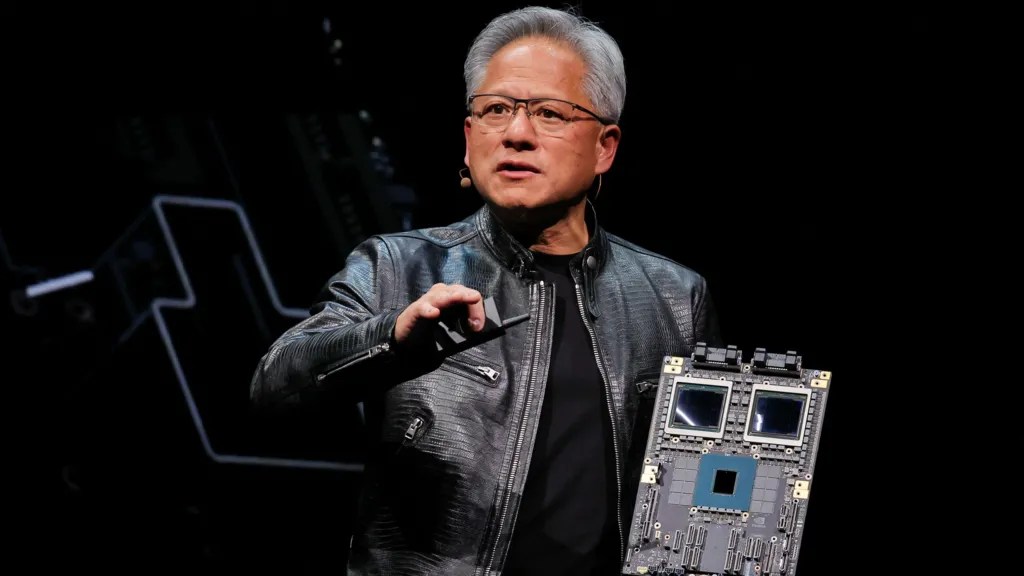
Washington, D.C., United States — Semiconductor giants Nvidia and AMD have agreed to pay the U.S. government 15% of their revenues from chip sales in China, marking an unprecedented arrangement aimed at securing export licenses amid escalating technology trade tensions.
The agreement comes after the Biden administration imposed strict export controls on powerful chips designed for artificial intelligence (AI), citing national security concerns. The controls followed similar restrictions introduced under former President Donald Trump, who effectively banned sales of Nvidia’s H20 chip to China in April 2025.
Under the deal, Nvidia will remit 15% of revenues generated from sales of its H20 chip in China, while AMD will do the same for its MI308 chip. Both chips had been developed or targeted specifically for the Chinese market following export restrictions.
Security experts have voiced alarm over the proliferation of these AI chips, warning they could enhance China’s military capabilities despite primarily being sold to civilian firms. A letter signed by 20 specialists last month warned the chips “will enable autonomous weapons systems, intelligence surveillance platforms and rapid advances in battlefield decision-making.”
Nvidia’s chief executive Jensen Huang has actively lobbied both U.S. and Chinese officials to ease restrictions, even meeting former President Trump recently. Nvidia maintains that the U.S. must maintain leadership in AI technology globally, cautioning against repeating mistakes made during the 5G era.
Experts say the financial terms of the deal highlight the increasing costs faced by tech firms trying to maintain access to the lucrative Chinese market amid deepening U.S.-China tensions.
In Beijing, the Ministry of Foreign Affairs reiterated China’s longstanding opposition to U.S. export controls, accusing Washington of “unilateral bullying” through the measures.
The move to resume chip sales occurs as trade relations between the two economic giants show signs of easing. China has relaxed rare earth export controls, while the U.S. lifted some restrictions on chip design software firms operating in China. However, a key 90-day truce on tariffs is set to expire soon, with no confirmed extension.
Meanwhile, major U.S. tech firms are announcing sizable investments domestically, aligning with President Trump’s push to strengthen American manufacturing and reduce reliance on China.
Nvidia, for instance, has committed up to $500 billion to build AI servers and supercomputers in the United States.
This complex backdrop underscores the high stakes for the global semiconductor industry as it navigates geopolitical pressures, regulatory hurdles, and fierce market competition.





Leave a comment