
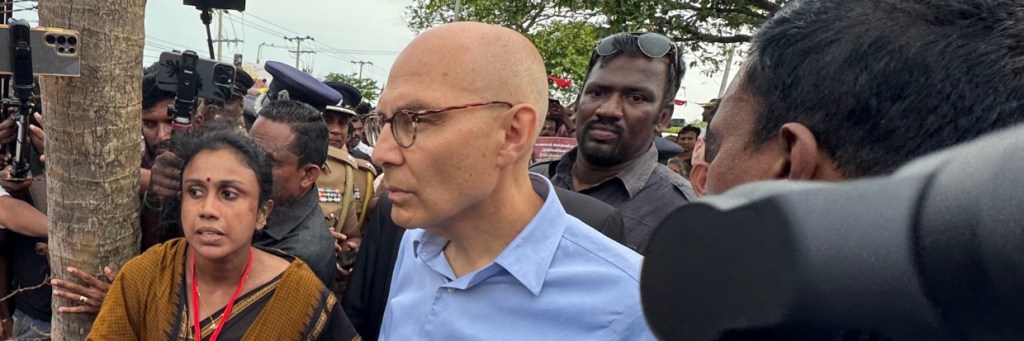
Colombo, Sri Lanka – Sri Lanka stands at a delicate juncture in its post-conflict journey, as the Government pledges transformative reforms amid enduring human rights concerns. A recent report by the Office of the United Nations High Commissioner for Human Rights (OHCHR), presented at the Human Rights Council’s sixtieth session, paints a nuanced picture of progress shadowed by persistent systemic issues.
The report evaluates developments from late 2024 to mid-2025, acknowledging the new Government’s intent to pursue accountability, legislative reform, and inclusive governance. Yet it underscores the formidable challenges that remain, particularly in addressing violations linked to the country’s protracted civil war, economic instability, and entrenched institutional weaknesses.
A Legacy of Impunity and Justice Deferred
For decades, Sri Lanka has grappled with the legacy of wartime atrocities, including enforced disappearances, assassinations, and sexual violence. While successive governments have promised accountability, investigations into emblematic cases have largely stalled, perpetuating mistrust among victim communities. The OHCHR emphasizes that without independent truth-seeking mechanisms and a transparent prosecutorial system, reconciliation efforts risk remaining symbolic rather than substantive.
The establishment of bodies such as the Office on Missing Persons and the Office for Reparations represents an institutional effort to address historical grievances. However, their limited resources and perceived lack of independence have eroded confidence among affected populations. Analysts note that credible transitional justice in Sri Lanka will require both institutional autonomy and meaningful civil society participation.
Economic Crisis Exacerbates Vulnerabilities
Sri Lanka’s ongoing economic crisis has intensified human rights risks. Poverty has surged, food insecurity has deepened, and marginalized communities—including estate workers, Malaiyahar Tamil populations, and female-headed households—bear the brunt of hardship. Government interventions, such as targeted tax relief and essential food subsidies, provide some relief but are constrained by heavy debt servicing obligations consuming nearly 9% of national GDP.
The OHCHR warns that austerity measures, coupled with insufficient social protection, compromise the State’s ability to uphold economic and social rights. Vulnerable populations face compounded pressures as access to healthcare, education, and social safety nets remains precarious.
Restrictive Laws and the Shrinking Civic Space
The report highlights ongoing legal and administrative restrictions, notably the continued enforcement of the Prevention of Terrorism Act (PTA) and the Online Safety Act. Broad and vaguely defined provisions enable arbitrary arrests, prolonged detention, and suppression of dissent. Civil society organizations, human rights defenders, and victims’ families confront bureaucratic hurdles and surveillance, particularly in the Northern and Eastern provinces where militarization of governance is pronounced.
Observers caution that without genuine legislative reform and rights-based implementation, laws intended to ensure security risk perpetuating marginalization and eroding democratic norms.
Land Disputes and Ethnic Tensions
Contentious land issues, including military-occupied lands, controversial gazette notices, and religious site disputes, continue to exacerbate ethnic and communal tensions. The OHCHR report notes that insufficient timeframes and inadequate documentation for land claims place displaced families at risk, undermining reconciliation efforts and trust in state institutions.
Strengthening International and Technical Mechanisms
The OHCHR emphasizes the role of forensic capacity, evidence preservation, and international cooperation in addressing past abuses. With Sri Lanka declining full engagement with international accountability frameworks, external mechanisms—including universal jurisdiction prosecutions, targeted sanctions, and diplomatic pressure—remain essential. The OHCHR’s Sri Lanka Accountability Project provides critical documentation to support such initiatives, highlighting the need for multi-layered strategies to break cycles of impunity.
Political Shifts and Reform Prospects
The election of President Anura Kumara Disanayaka and the National People’s Power parliamentary majority reflects a political opening for reform. Gender representation has improved with the appointment of a female Prime Minister, though women remain underrepresented overall. Despite promising rhetoric, slow legislative reforms and selective engagement with human rights mechanisms suggest that political pragmatism continues to temper ambitious reform agendas.
Conclusion: Between Hope and Caution
The OHCHR report presents a sobering yet cautiously hopeful assessment. Sri Lanka’s path toward justice, reconciliation, and sustainable peace is complex, requiring coordinated domestic and international action. Addressing the economic crisis, reforming restrictive laws, ensuring accountability for past abuses, protecting civil society, resolving land disputes, and strengthening institutional frameworks are critical steps.
For Colombo, the challenge is clear: transformative rhetoric must translate into concrete, time-bound action. The country’s future hinges on its ability to harmonize political will, social justice, and economic recovery—an endeavor that will determine whether Sri Lanka can finally reconcile its past while securing a stable, rights-respecting future.
Timeline of Key Developments
2007–2010: Early Regulatory Attempts
Informal gambling networks, including small betting shops and online operations, proliferated in urban centers. Previous regulatory measures existed on paper but were limited by fragmented enforcement. Communities reported rising concerns over youth exposure to betting, with social activists highlighting addiction and family disruption.
2011–2015: Expansion of Betting Culture
The rapid growth of online gambling, combined with increased tourism in coastal regions, exposed gaps in the country’s regulatory framework. Law enforcement agencies struggled to monitor cross-border online platforms, while local bookmakers operated with minimal oversight. Public discourse around gambling shifted from moral debate to economic pragmatism: how could the state benefit from an inherently risky sector?
2016–2019: Social Consequences Gain Attention
Studies by non-governmental organizations and media investigations revealed that unregulated gambling contributed to rising debt levels among lower-income families. High-profile incidents, including disputes involving illegal betting syndicates, fueled calls for a comprehensive regulatory structure. Parliament debated several proposals, but political consensus was elusive.
2020–2024: Policy Planning and Draft Legislation
Amid ongoing fiscal pressures, Sri Lankan policymakers began examining gambling as a potential source of tax revenue and tourism development. Drafts for a centralized regulatory authority circulated within the Ministry of Finance and the Department of Parliament, emphasizing three core objectives: protect vulnerable communities, standardize betting operations, and stimulate economic growth.
April 2025: Gazette Publications and Preparatory Regulations
In preparation for the Bill, the Committee on Public Finance reviewed and approved multiple fiscal instruments:
- Section 10 of the Customs Ordinance regarding import duties.
- Section 3 of the Excise (Special Provisions) Act for excise administration.
- Section 19 read with Section 51 of the Finance Act on luxury taxes for motor vehicles.
These measures reflected a broader approach to structured economic governance, signaling that the gambling sector’s regulation was part of a coordinated fiscal strategy.
Mid-2025: COPF Approval
Under the acting chairmanship of MP Rauf Hakeem, the Committee approved the Gambling Regulatory Authority Bill. Attendees included Deputy Minister Chathuranga Abeysinghe and MPs Ravi Karunanayake, Dr. Kaushalya Ariyaratne, Attorney-at-Law Lakmali Hemachandra, and Nishantha Jayaweera.
The newly approved Authority is tasked with:
- Licensing and monitoring gambling and gaming establishments.
- Reducing social harm through public education and compliance enforcement.
- Driving tourism initiatives linked to regulated entertainment.
- Contributing to national revenue through transparent oversight.
Looking Ahead
Analysts observe that the establishment of the Gambling Regulatory Authority is both symbolic and practical. Symbolically, it demonstrates Sri Lanka’s willingness to confront long-standing governance gaps. Practically, it lays the foundation for a regulated industry that could generate significant economic returns, particularly in tourism and luxury entertainment sectors.
However, challenges remain. Past incidents reveal the difficulty of enforcing regulations against informal or illicit operators. Experts emphasize the need for comprehensive monitoring, community engagement, and strong political will to ensure that the Authority’s broad mandate translates into tangible outcomes.
Human Impact and Social Stakes
Beyond fiscal and legal considerations, the bill carries human implications. Families affected by gambling addiction hope that the Authority’s preventive and rehabilitative strategies will offer relief. Business operators, meanwhile, anticipate clearer rules that could legitimize their ventures while ensuring a level playing field.
For Colombo’s policymakers, the Gambling Regulatory Authority represents a test of governance in a sector long associated with both opportunity and risk. The coming months will determine whether the country can balance economic ambitions with social responsibility—a gamble in its own right.



Leave a comment