
Colombo, Sri Lanka – Visitors to Sri Lanka often arrive expecting a holiday. They leave with something that is harder to name. An island roughly the size of Ireland, Sri Lanka compresses so many cultural, historical, political and natural contradictions into its modest geography that travelling here feels less like touring a country and more like being folded into a living archive. Beaches, tea fields, ancient capitals, civil war scars, cinnamon trees, colonial railroads, Theravada temples and Hindu shrines – nothing stays in its lane. Even leisure has memory.
One doesn’t need to look far to see this interplay between past and present. Take the drive from Colombo’s frenetic port district toward Cinnamon Gardens, where British-era clubs still serve afternoon tea under polished ceiling fans. On the street outside, tuk-tuks weave past modern galleries and pop-up espresso bars filled with young Sri Lankans debating cricket and inflation in equal measure. The combination is incongruous, yet entirely normal here. As one Colombo resident put it, “There is no such thing as the old Sri Lanka and the new Sri Lanka – there is only everything at once.”
The Island as Microcosm
Sri Lanka is often described as “South Asia in miniature” – not only for its kaleidoscope of landscapes but for the complexity of its recent past. Nearly every visitor quickly becomes aware of the civil war that raged for twenty-six years and ended only in 2009. The war is not visibly present in the major tourist areas, yet it silently informs the temperament of the country. In Colombo you may walk past elegant colonial architecture in the morning and hear quiet conversations, over rice and dhal, about relatives who disappeared decades ago.
What surprises many travellers is how quickly the island shifts from one world to another. Two hours by train from Colombo and one is in the hill capital of Kandy, where mist wraps the mountains and locals walk barefoot to the Temple of the Sacred Tooth while chanting prayers. The lake reflects palace roofs and temple spires, and monks pour sandalwood-scented oil over stone altars as night falls. Already it feels impossible that a modern capital sits just a short drive away.
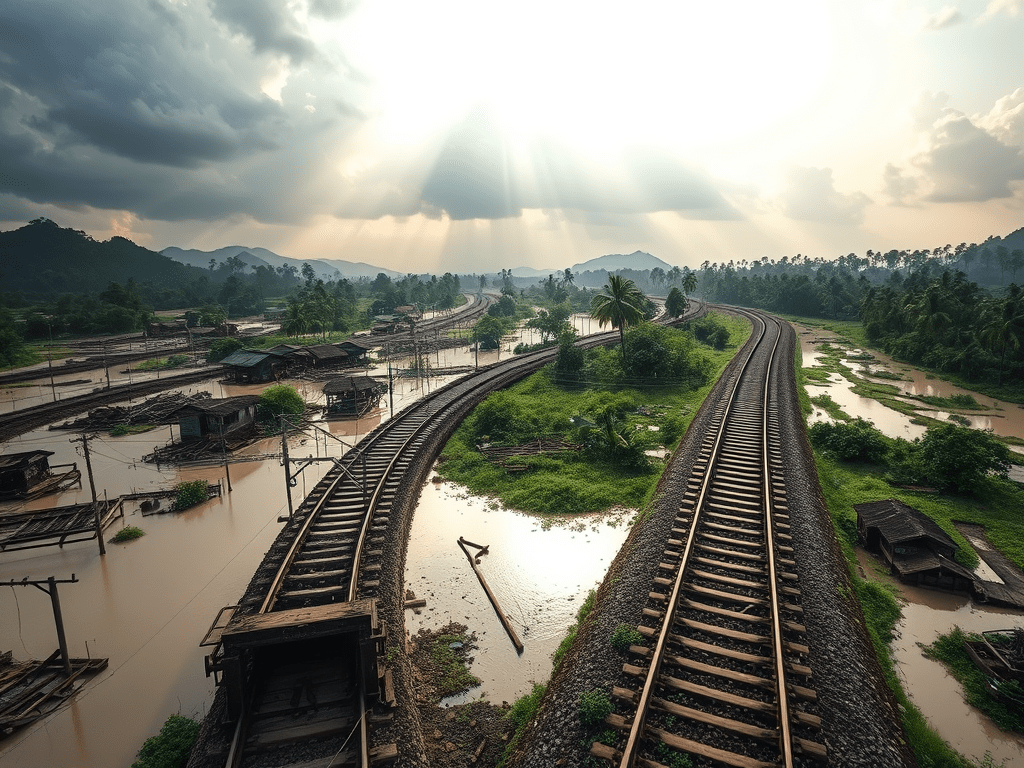
Continue by train along the Main Line – one of the world’s most beautiful railway journeys – and Sri Lanka reveals another layer of itself. The track climbs through emerald tea plantations and eucalyptus forests, past colonial-era stations painted in fading pastel yellow. You notice how the air grows colder, how the leaves pile in silent terraces up the hillsides. It was here, in Ella and Nuwara Eliya, that British planters arrogantly fashioned a little England in the tropics. What they built remains, but time has stripped it of its power. The bungalows feel less like symbols of conquest now and more like faint echoes.
Sacred Cities and Solitude
No visit to Sri Lanka is complete without experiencing its ancient cities. Anuradhapura and Sigiriya are not tourist attractions so much as living monuments. In Anuradhapura, devotees still place jasmine garlands beside the oldest cultivated tree in the world – a cutting of the very fig tree under which the Buddha reached enlightenment more than two thousand years ago. The past remains functional here; history is still being used.
At Sigiriya, rising out of the jungle like a geological hallucination, the climb is steep and slow. It is easy to become short of breath, but the payoff is astonishing. Halfway up, the Mirror Wall still flickers with fragments of ninth-century poetry. At the summit, two enormous lion’s paws frame the view across the island. No matter how many guidebooks one reads, nothing prepares you for the feeling of standing above an ancient citadel wondering how it was ever built. Local farmers below will tell you quietly that the rock still belongs to the king, and you almost believe them.
The Coast as Counterpoint
After the interior, Sri Lanka’s coastline feels like a deep sigh. At Galle, Portuguese and Dutch architecture gives the town its European poise, but its gentleness belongs purely to the Indian Ocean. In the late afternoon, couples drift along the ramparts in silence. Local children dart between them playing cricket. Birds perch on the lighthouse and for a moment, Galle looks less like a fort and more like a stage set for a love story that never ends.
Further east, in Arugam Bay, the pace slows even more. Thatched huts, midday heat, moon-shaped sand and long rolling surf. Here, the waves become part of your schedule, and the lines between weather, tide and time seem to blur. Surfers rise before sunrise, fishermen mend nets in the shade, and travellers drink ginger tea between swells. It is the kind of place people plan to visit for a night and end up staying for a week.
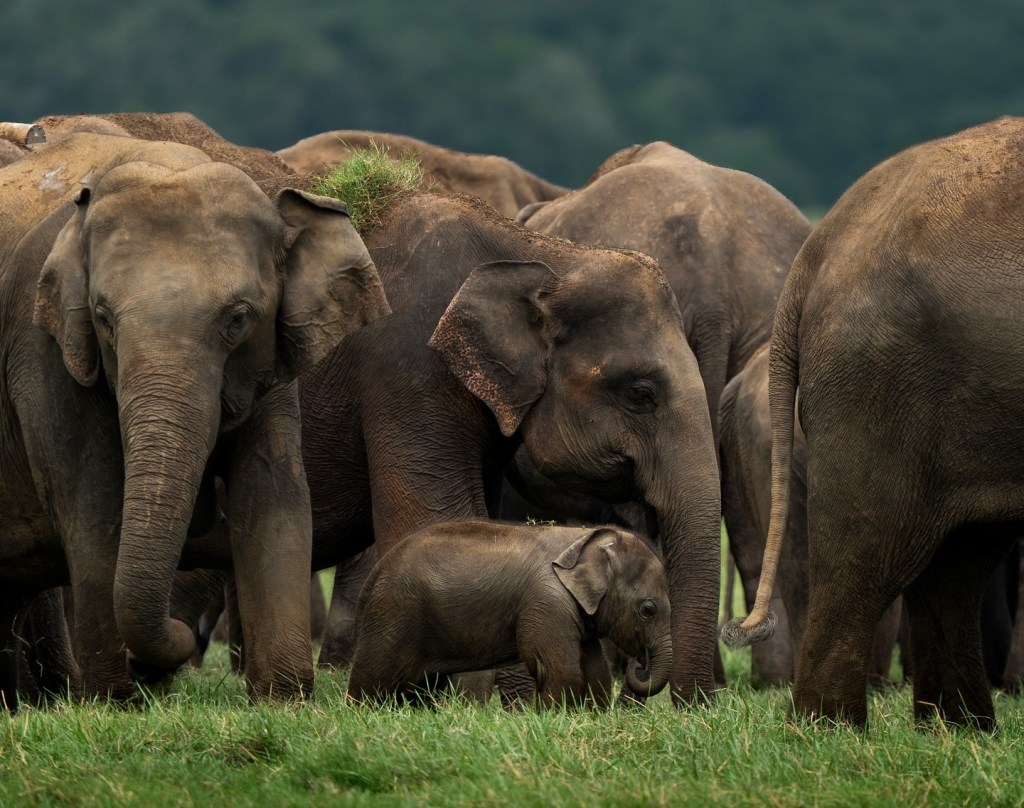
When the urge to explore returns, Kumana National Park is close at hand. There are no crowds clamouring for the sight of an elephant; no souvenir stalls along the road. Instead there is silence, broken only by birds lifting from the swamp grass. A leopard sometimes appears and vanishes as quickly. There is no guarantee of what you will see – and that is precisely the point.
The North Opens Again
For years, Jaffna was largely absent from itineraries, cut off by war and memory. Today, the city’s colourful Tamil temples hum with ritual and life. The forts are smaller than those in the south but more intimate. The food – dosas, lentils, coconut sambal – reminds you that Sri Lanka’s cultures are plural. It is here that travellers often understand how misleading it is to think of Sri Lanka as homogenous or singular. Its unity is real. Its diversity is real. The tension between the two is part of its identity.
From Jaffna, many travellers head to Wilpattu National Park, a great sweep of forest and marshland that has resisted the commercialisation seen in other reserves. There are no paved viewing stations. Instead, narrow dirt tracks cut through thick brush, and the occasional sound of a sloth bear or the flick of a deer’s tail reminds you that this wilderness existed long before the island had a name.
A Country That Never Becomes Routine
What makes Sri Lanka a singular travel experience is not simply its beauty, though it has plenty of that. It is the way beauty and history exist as one thing, so deeply entangled that even a beach becomes part of the national narrative. It is an island that never allows you to remain a “tourist” for long. You are always shown some other layer – a story handed down through families, a scar not visible at first sight, a ceremony in a temple courtyard, the generosity of someone who has known hardship and chooses kindness instead of bitterness.
Sri Lanka does not promise easy travel. Trains are late, roads crowded, the humidity relentless. But discomfort is over-matched by the sheer abundance of what the island offers: the warmth of its people, the complexity of its past, the range of its landscapes, and the seriousness with which it still performs the rituals of belonging.
One leaves Sri Lanka not with a list of sites visited but with a deeper sense of how places themselves carry memory and resilience. There are countries one visits and countries one learns from – Sri Lanka, for many travellers, is both.


Leave a comment