
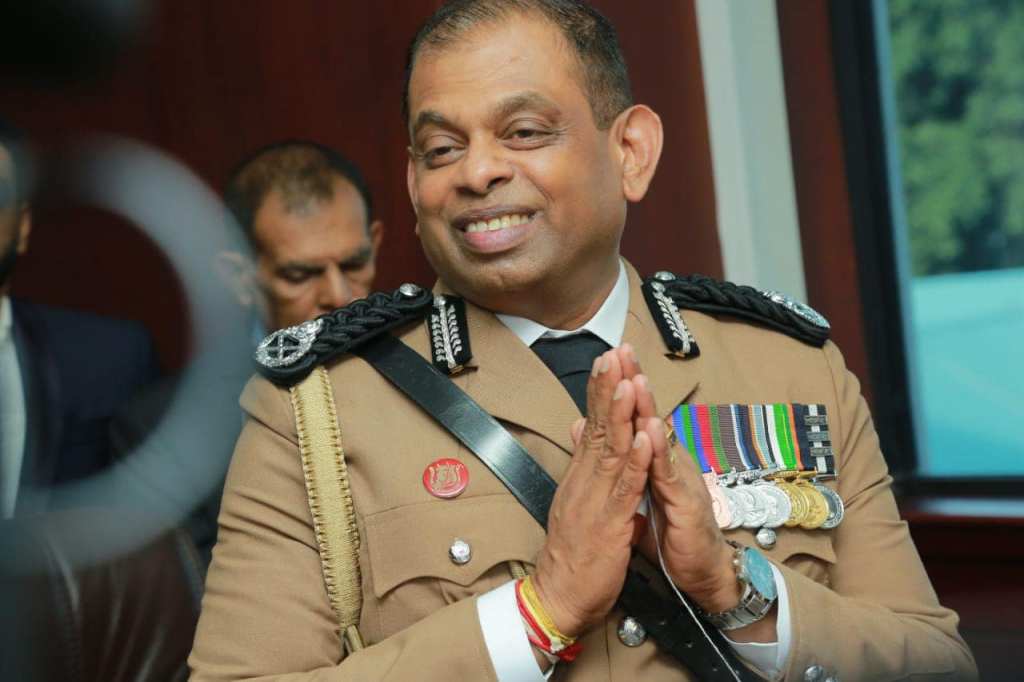
Colombo — Few figures embody the contradictions of Sri Lanka’s post-crisis governance more starkly than Tennakoon Mudiyanselage Wanshalankara Deshabandu Tennakoon. Once hailed as a trusted enforcer in the country’s security apparatus, he has now become a symbol of institutional decay, political entanglement, and the unfinished reckoning over state accountability.
His story is not merely that of a police officer gone rogue. It is a reflection of how fragile the line between law enforcement and political patronage remains in Sri Lanka, and how unresolved wounds from the island’s recent past continue to resurface.
Early Promise and the Making of a Policeman
Born in 1971, Tennakoon received his education at Nalanda College, Colombo, and later earned degrees from the University of Colombo and the University of Kelaniya. Joining the Sri Lanka Police as an Assistant Superintendent in 1998, he quickly climbed through the ranks. His career trajectory aligned with the state’s need for officers who could exercise both authority and loyalty during times of political volatility.
By the late 2010s, Tennakoon was a prominent figure, serving as Senior Deputy Inspector General in charge of the Western Province—a role that placed him at the heart of Colombo’s political and security theater.
Black Monday and Public Backlash
The turning point in his reputation came during the 2022 “Aragalaya” protests, when pro-government mobs attacked anti-Rajapaksa demonstrators at Galle Face Green and Temple Trees. Tennakoon’s presence at the protest sites raised troubling questions about whether security forces were complicit in—or at least indifferent to—the violence.
The day after, he himself was assaulted by angry civilians near Temple Trees. The incident was emblematic: a senior police officer, once shielded by power, suddenly confronted by the fury of a betrayed public.
A Shadowed Past: Human Rights Judgment
Tennakoon’s credibility suffered further in December 2023, when Sri Lanka’s Supreme Court found him guilty of torture in a 2010 case involving a civilian, Weheragedara Ranjith Sumangala. The ruling, though years in the making, exposed the darker underside of police culture—routine brutality, lack of accountability, and political protection. The judges directed disciplinary action, but political winds were already moving in another direction.
Ascent to the Top
Despite the ruling, President Ranil Wickremesinghe appointed Tennakoon Acting Inspector General of Police in November 2023, later confirming him permanently in February 2024.
The appointment was fraught. Opposition leader Sajith Premadasa claimed the vote within the Constitutional Council had been irregular, casting doubt on its legality. Civil society groups, too, warned that elevating an officer convicted of human rights abuses risked undermining both the police’s integrity and Sri Lanka’s fragile reform agenda.
Collapse of Authority
By mid-2024, those warnings proved prescient. On 24 July 2024, Sri Lanka’s Supreme Court suspended Tennakoon, a rare judicial intervention against the country’s highest-ranking police officer.
Soon after, scandal deepened. On 31 December 2023, an unauthorized operation in Weligama linked to the Colombo Crime Division resulted in the killing of a police officer. By early 2025, the Matara Magistrate’s Court issued an open warrant for Tennakoon’s arrest, alleging conspiracy to commit murder. The move was unprecedented—an Inspector General pursued as a fugitive.
For months, he evaded capture, surfacing only through legal maneuvers, including a writ petition to prevent his arrest. Rumors swirled of political protection, hidden safehouses, and a network of loyalists shielding him.
The Fall
By August 2025, Parliament had had enough. In a unanimous resolution under the Removal of Officers Act, legislators voted to strip Tennakoon of his office. Priyantha Weerasooriya was appointed as his successor, signaling an attempt to close a chapter that had embarrassed the state.
But closure remained elusive. Just weeks later, the Criminal Investigation Department (CID) arrested Tennakoon in connection with the May 9, 2022 “Black Monday” attacks. On 20 August 2025, Colombo’s Fort Magistrate ordered him remanded until August 27, ensuring he would finally face formal judicial scrutiny.
The Larger Picture
Tennakoon’s trajectory illustrates a broader malaise: the inability of Sri Lanka’s institutions to insulate themselves from political interference. His rise was enabled by expediency—his loyalty mattered more than his record. His fall was shaped not by internal reform, but by a combination of judicial intervention, political calculation, and public anger.
The case also revives questions about accountability for the 2022 protests, where systemic failures left scars on the country’s democratic fabric. For many Sri Lankans, Tennakoon is not an isolated figure but the embodiment of a culture where police power often collides with political interests.
What Comes Next
As he sits in remand custody, Tennakoon remains both a cautionary tale and a test case. Will his prosecution mark a genuine shift toward accountability in Sri Lanka’s law enforcement, or will it fade into another cycle of scapegoating and forgotten promises?
For now, one fact is clear: the once most powerful policeman in the country, who navigated crises and courted political favor, has fallen into the very system he once commanded.
Key Events Timeline: Deshabandu Tennakoon, Sri Lanka’s Former IGP
Early Appointment & Suspension
29 November 2023 – President Ranil Wickremesinghe appoints Deshabandu Tennakoon as Acting Inspector General of Police (IGP), a move that immediately sparks debate over constitutional procedure. Critics argue that the executive had bypassed established appointment protocols, setting the stage for legal and political battles.
26 February 2024 – Tennakoon is confirmed as the 36th IGP of Sri Lanka. Despite objections from civil society and opposition politicians, the appointment is formalized, consolidating his control over the police force.
24 July 2024 – The Supreme Court suspends Tennakoon from office, ruling that the process of his appointment violated constitutional provisions. This decision throws the leadership of the police service into crisis.
5 August 2025 – Parliament takes the unprecedented step of voting to remove Tennakoon from office. It marks the first time in Sri Lankan history that an Inspector General of Police has been ousted by the legislature.
Weligama Incident & Evasion
31 December 2023 – During a late-night police raid near the W15 Hotel in Weligama, a gunfight erupts. A police officer is killed under controversial circumstances. Investigations later reveal that the operation had been unauthorized, with allegations pointing to senior complicity.
28 February 2025 – The Matara Magistrate’s Court issues an open warrant for Tennakoon’s arrest, along with eight other officers, on charges of conspiracy to commit murder related to the Weligama shooting. The court also imposes a travel ban, effectively grounding him within Sri Lanka.
March 2025 – Instead of submitting to arrest, Tennakoon goes into hiding. For 21 days, he evades capture while simultaneously filing a writ petition in the Court of Appeal seeking protection from arrest. Multiple raids across Colombo and the Southern Province fail to locate him.
24 March 2025 – Tennakoon finally surrenders to the Matara Magistrate’s Court after weeks on the run. His surrender is viewed as a calculated move to regain some measure of legal and political control over the situation.
Aragalaya Attack Arrest & Remand
20 August 2025 – The Criminal Investigation Department arrests Tennakoon at his residence in Mirihana. The arrest is linked to his alleged role in the violent crackdown on protesters during the “Aragalaya” movement at Galle Face in May 2022. The detention deepens the sense of accountability that had long eluded top officials.
21 August 2025 – Tennakoon is presented before the Colombo Fort Magistrate. His anticipatory bail request is denied, and he is remanded until 27 August 2025. The magistrate orders witness testimonies and supporting evidence to be brought before the court, solidifying the case against him.
The Shadow Over Sri Lanka’s Policing
The downfall of Deshabandu Tennakoon, once the most powerful law enforcement officer in Sri Lanka, underscores the deep structural fractures within the country’s policing system. His rapid ascent, marred by constitutional irregularities, revealed how executive power could override institutional safeguards. His suspension and eventual removal by Parliament marked an unprecedented assertion of accountability, but also highlighted how fragile the balance between law, politics, and justice remains.
The Weligama shooting and his subsequent evasion of arrest further damaged public trust, exposing the culture of impunity that has long shielded senior officers from scrutiny. His final arrest in connection with the Aragalaya protest crackdown added a historical weight: for the first time, a sitting or former IGP was being directly tied to state violence against civilians in court proceedings.
In the end, Tennakoon’s story is less about one man than about an institution at a crossroads. Sri Lanka’s police force, long accused of politicization and abuse, now faces a reckoning. Whether this moment leads to genuine reform or simply another reshuffling of power will determine if the rule of law can rise above political expediency in Colombo.


Leave a comment