
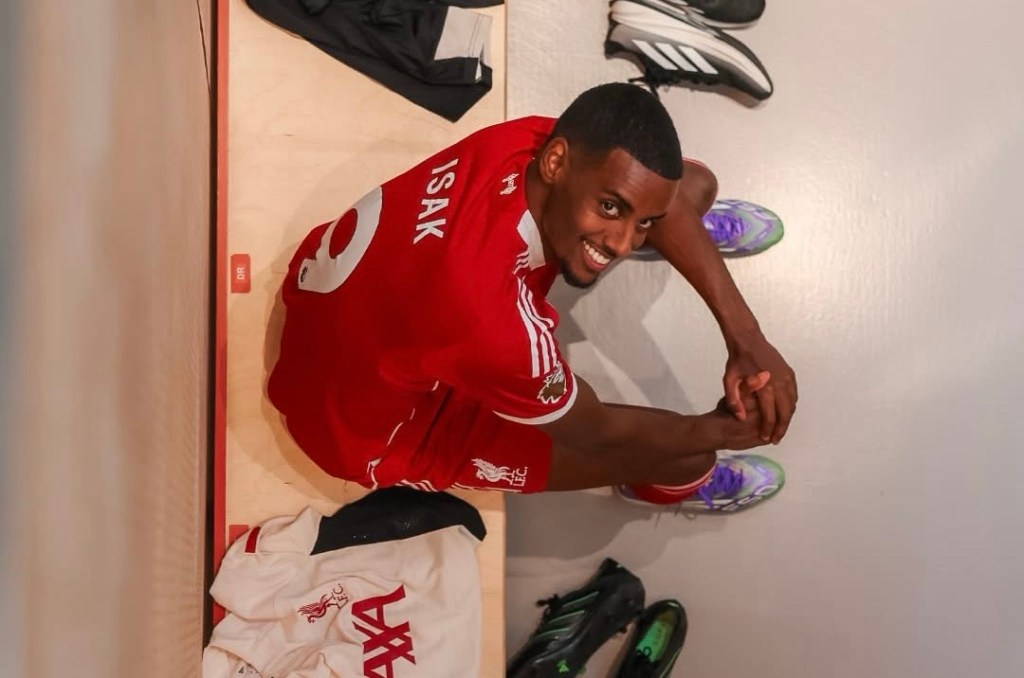
London — When Alexander Isak signed for Newcastle United in August 2022, he was heralded as the spearhead of the club’s Saudi-funded revolution. Three years later, he has become something else entirely: the protagonist of the most expensive transfer in British football history.
Liverpool’s £125 million move, potentially rising to £130m with add-ons, has rewritten the Premier League’s record books and transformed Isak into both a symbol of football’s financial turbulence and a case study in the shifting geopolitics of the modern game.
What follows is not only the story of a striker’s transfer. It is the tale of how star players, sovereign wealth, and globalised capital collided in one of the sport’s most revealing dramas.
The Seeds of Discontent
By the summer of 2025, Isak had established himself as Newcastle’s talisman. He scored 27 goals in 42 appearances in the 2024/25 season, his pace and precision embodying the club’s rise into the Premier League’s top four.
Yet, beneath the statistics, dissatisfaction grew. Insiders spoke of promises made but not delivered — regarding squad strengthening, wage parity, and personal development. Newcastle, balancing UEFA’s Financial Fair Play (FFP) obligations, had quietly tightened their spending after a lavish first two years.
The first public crack appeared in July 2025, when Newcastle embarked on their lucrative pre-season tour of Asia. Isak was conspicuously absent, officially due to a “minor thigh problem.” In reality, he was training separately — and, astonishingly, even seen working with his former club Real Sociedad.
On August 19, the matter spilled into the open. Through Instagram, Isak announced he could “no longer continue” under Newcastle’s conditions, citing “broken promises.” In the space of 300 words, a forward had effectively resigned from his employer. For modern football, it was a declaration of independence, bypassing journalists and club channels.
Newcastle’s Defiance
The response from St James’ Park was swift and uncompromising. In an official statement, the club insisted:
“No commitment has ever been made that Alex can leave this summer.”
Behind the scenes, the message was clearer: no sale without a replacement. The Saudi-backed Public Investment Fund (PIF), Newcastle’s ultimate owner, could not afford to appear weak. Having positioned the club as a vehicle of soft power and prestige, letting their record signing walk away without resistance would undermine the project.
Manager Eddie Howe, meanwhile, was left to manage the fallout. Reports circulated of a fractured dressing room — some teammates sympathetic to Isak’s frustrations, others angered by what they saw as a betrayal.
The standoff echoed labor disputes in other industries: a star worker refusing to clock in until management acknowledged his grievances.
Liverpool’s Opening Gambit
Liverpool had been circling Isak for months. Their first bid, estimated at £110 million, was rejected outright. Newcastle pointed to a £150 million valuation, bolstered by a sell-on clause owed to Real Sociedad that would siphon off part of any profit.
For Newcastle, selling at anything less was both financially and politically unpalatable. For Liverpool, missing out risked leaving them without a marquee forward to replace the aging Mohamed Salah’s goal-scoring dominance.
By August, negotiations had hardened into a staring contest. Liverpool were backed by Fenway Sports Group’s new Middle Eastern investment partners and emboldened by record broadcasting revenues. Newcastle had the money of a sovereign wealth fund, but also the constraints of UEFA regulation. Neither side wished to blink.
The Week That Broke the Deadlock
The impasse lasted until the final week of August. Newcastle’s sporting directors knew the club’s financial stability required resolution. The key was recruitment.
On August 28, they completed the £69 million signing of Nick Woltemade from Stuttgart, and advanced talks for Brentford’s Yoane Wissa at £55 million. With reinforcements secured, the Saudi-funded hierarchy calculated they could release Isak without dismantling Howe’s season plan.
Liverpool seized the opportunity. On September 1 — deadline day — they submitted a final bid: £125 million, plus add-ons pushing it to £130m. Newcastle accepted.
The Announcements: Curt vs Celebratory
Newcastle’s confirmation came in a terse 37-word press release, noting Isak’s 109 appearances and thanking him for his service. The brevity suggested resignation rather than celebration — a divorce statement drafted with clenched teeth.
Liverpool, by contrast, made the moment a spectacle. Club channels framed the deal as a milestone in their rebuild, pushing their total summer spend beyond £400 million.
Isak was unveiled as the new face of Anfield’s ambitions, a Scandinavian heir to the club’s lineage of transformative strikers.
Beyond Football: A Transfer as Case Study
What does this episode reveal about the modern game? Several themes emerge:
1. Player Power Ascendant
Isak’s use of Instagram to force Newcastle’s hand illustrates how players now control the narrative. No longer reliant on sympathetic journalists, stars can bypass institutions and speak directly to millions. In the politics of perception, the individual increasingly outguns the club.
2. Sovereign Wealth Meets Regulation
Newcastle’s Saudi ownership could not insulate the club from the practical limits of FFP and UEFA scrutiny. In the end, even sovereign wealth conceded to accounting reality, proving that football’s regulatory architecture still matters — if unevenly applied.
3. Liverpool as Global Investor
The Isak transfer highlights Liverpool’s evolution from a romantic club of Shankly and Kopite folklore to a global investment vehicle. With American ownership and new Middle Eastern partners, their financial playbook now mirrors that of a hedge fund: bold, calculated, and unashamedly global.
4. The Geopolitics of Scarcity
Elite forwards remain the scarcest resource in the global game. Haaland is untouchable, Mbappé is tied to Paris and Madrid, and Bellingham is wedded to Real. Isak’s availability — and his willingness to force an exit — made him the rare commodity worth a record fee.
The Costs and the Risks
For Isak, the move carries both opportunity and peril. He enters Anfield as Britain’s most expensive footballer, burdened with the expectation of instant goals. The Premier League is unforgiving; reputations are made and unmade within months.
For Newcastle, the risk is reputational. Selling their star forward could stall momentum, though Woltemade and Wissa may yet vindicate the decision. For the Saudi project, the optics are delicate: ambition tempered by constraint.
For Liverpool, the gamble is strategic. A record fee will only be judged successful if it delivers trophies. In an era when Manchester City dominate, Liverpool are wagering capital against certainty.
Football as a Global Mirror
The Isak saga resonates because it mirrors wider dynamics of the 21st century:
Capital mobility: Money flows rapidly across borders, from Riyadh to Boston to Liverpool, shaping outcomes far from its origin. Sovereignty vs regulation: States and funds seek influence, but face rules — sometimes rigid, sometimes pliable — that mediate ambition. Individual agency: From whistleblowers to footballers, individuals now wield global platforms to alter the course of institutions.
In this sense, the striker’s transfer tells us as much about geopolitics as it does about sport.
Conclusion: The Parable of Isak
Alexander Isak’s departure from Newcastle and arrival at Liverpool is more than a record-breaking deal. It is a parable of modern football: a global marketplace where sovereign funds, American investors, and star players negotiate power in real time.
Tyneside loses its talisman. Merseyside gains its new icon. The Premier League absorbs another surge of capital. And the rest of the world watches, reminded once more that in the theatre of modern sport, the drama on the pitch is only half the story.




Leave a comment