
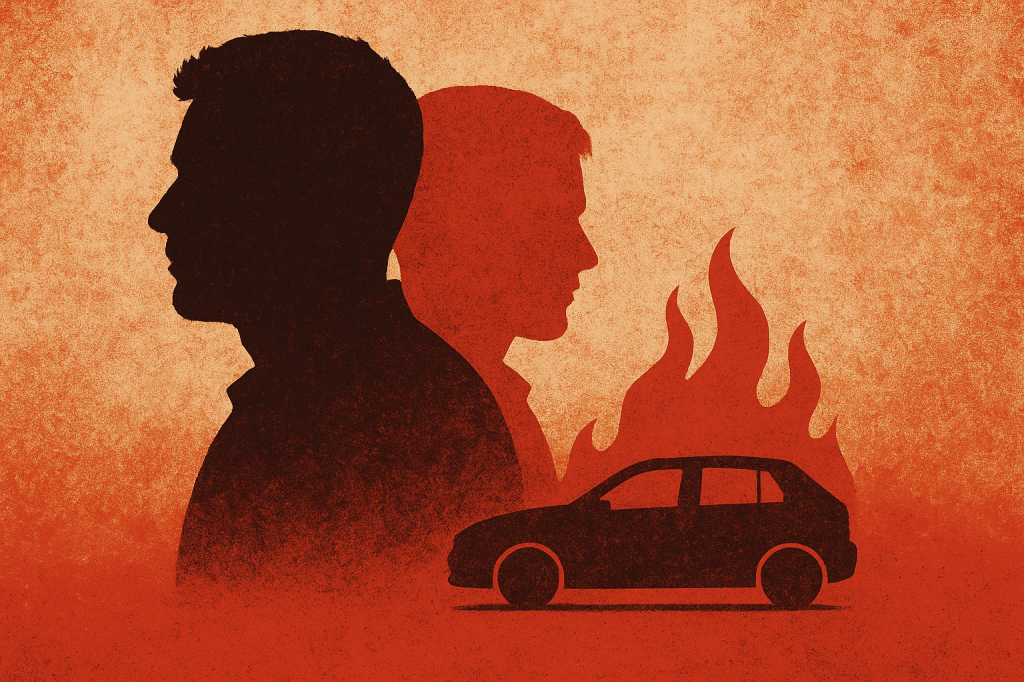
A Death That Shook a Nation
On a humid night in May 2012, Sri Lanka’s sporting community was jolted. Wasim Thajudeen, a star rugby player and youth icon, had died. His car was ablaze near Shalika Grounds in Colombo. It was presented to the public as the site of a fatal road accident. Yet for many Sri Lankans, the explanation seemed hollow. Whispers of foul play began circulating almost immediately. The rumors hinted at a case. It would come to symbolize the intersection of politics, organized crime, and the corrosion of justice in the island nation.
From Accident to Homicide
The official police narrative crumbled quickly under scrutiny. Forensic evidence revealed bone fractures inconsistent with a simple crash, suggesting beatings before the fire. Eyewitness reports and CCTV footage indicated that Thajudeen had been followed in the moments before his death. Despite mounting irregularities, authorities initially stood by their accident theory until the change of government in 2015 forced the case open again.
Thajudeen’s body was exhumed, and medical experts confirmed what many already believed: this was murder, not misfortune. The state’s volte-face underscored how institutions had been bent to protect the powerful.
The Cover-Up Machine
The reopened investigation revealed an apparatus designed not to solve a crime, but to conceal it. Senior police officials, including a former Deputy Inspector General, were indicted for destroying or fabricating evidence. A respected judicial medical officer faced charges of tampering with autopsy findings. Each revelation eroded public confidence, painting a picture of a state willing to compromise truth for political expediency.
For Sri Lanka’s citizenry, the Thajudeen affair became shorthand for systemic rot. The murder of a national sports figure could be so casually buried. What chance did ordinary citizens have?
The Political Nexus
No court has delivered a verdict implicating political elites. However, media reports and witness testimonies repeatedly pointed toward connections with the Rajapaksa family. They were then dominant in Sri Lankan politics. Thajudeen’s alleged falling out with members of the inner circle added fuel to suspicions. The case shifted focus. It became less about a rugby player. It became more about the ability of Sri Lanka’s judiciary to hold political royalty accountable.
The inability—or unwillingness—to prosecute those at the top reinforced a culture of selective justice. Those with influence remained untouchable, while the machinery of justice focused on peripheral actors.
Enter the Underworld: Kajja and Backhoe Saman
For years, the trail stagnated. Then, in 2025, the brutal murder of an underworld figure known as Kajja changed the equation. Shot dead with his children in Middeniya, Kajja was later identified in CCTV footage as one of the men shadowing Thajudeen on the night of his death. His assassination sparked fresh arrests and revived dormant leads.
Testimonies from other figures in Colombo’s underworld, such as the notorious Backhoe Saman, suggested that Thajudeen’s killing had been orchestrated with both political protection and underworld muscle. The overlap between state actors and criminal networks was no longer speculative; it appeared systemic.
A Mirror for Sri Lanka’s Governance
Thajudeen’s case is not merely about a single murder. It is a prism through which to view Sri Lanka’s governance failures. The episode illustrates three interlocking crises:
- Impunity – Institutions bent under pressure, shielding the influential from scrutiny.
- State-Crime Nexus – Political elites outsourced violence to underworld networks, blurring the line between governance and gangsterism.
- Judicial Weakness – Delays, tampering, and selective prosecution eroded faith in the courts as a neutral arbiter.
These dynamics have profound implications for Sri Lanka’s democratic trajectory. Justice delayed is not just justice denied—it is evidence of institutional capture.
Regional Parallels and Global Implications
Sri Lanka’s Thajudeen scandal fits into a broader South Asian pattern where sports, celebrity, and politics converge with lethal consequences. Athletes and entertainers, by virtue of their visibility, often collide with political interests. In Thajudeen’s case, his fame may have amplified the stakes of a personal or political grievance.
For foreign observers, the case has become a litmus test of Sri Lanka’s rule of law. Western diplomats and human rights organizations see in it an emblem of the country’s broader governance crisis. For China and India, major stakeholders in Sri Lanka’s strategic future, it underscores the risks. Conducting business in a system where the rule of law is negotiable is risky.
The Aftermath and the Road Ahead
Thirteen years on, the case remains unresolved. Families of victims, civil society organizations, and opposition politicians continue to demand accountability. There is a revolving door of suspects. Key underworld figures have been assassinated. Opaque investigations suggest that closure may remain elusive.
The broader question lingers: can Sri Lanka break the cycle of impunity? Without accountability at the highest levels, the answer appears bleak. The Thajudeen affair endures as a cautionary tale. It reflects not only a young life brutally ended. It also shows a nation struggling to reconcile justice with entrenched power.
Conclusion
The killing of Wasim Thajudeen is no longer just about a rugby star. It is about whether Sri Lanka can confront its own demons: the marriage of political power and organized crime, the weaponization of state institutions, and the corrosive legacy of impunity. Until those questions are answered in a court of law, Thajudeen’s burning car will remain a haunting metaphor for a country where truth itself is too often set aflame.


Leave a comment